
The Haynesville Shale: A Game-Changer for the Energy Industry
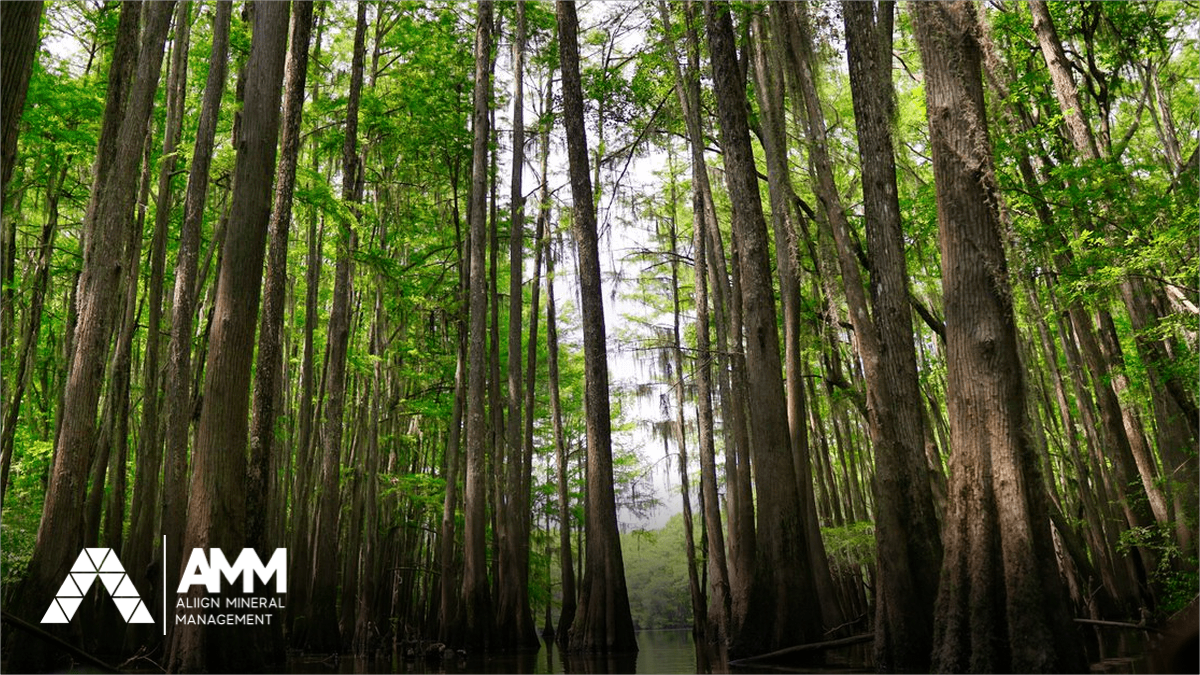
Beneath Caddo Lake on the Texas-Louisiana border, wooden platforms and rusted pipes have stood in the water for more than a century. Most people fishing the lake on a Saturday morning have no idea what lies beneath them. As GeoScope documented in its recent YouTube video, This Hidden Gas Field Beneath Louisiana Could Change Everything, few realize they are floating above one of the largest natural gas deposits on the planet — a formation that has fundamentally reshaped American energy production while remaining virtually unknown to the general public.
The Haynesville Shale spans more than nine thousand square miles of northwestern Louisiana, East Texas, and southern Arkansas. It holds an estimated forty-eight trillion cubic feet of recoverable natural gas — enough to meet total United States demand for approximately eighteen months — and has already produced more than forty-nine trillion cubic feet on top of that. Yet if you asked one hundred people on a street in Chicago or Seattle to name a major American gas field, almost none would say Louisiana.
That gap between what this formation actually produces and how little anyone has heard of it spans more than a century of accidental discovery, technological limitation, and economic boom and bust — and a recent transformation that has made it a cornerstone of American energy strategy.
An Accidental Discovery
According to historical accounts cited by GeoScope, the story starts with a rowboat and a box of matches. In the early nineteen hundreds, a twenty-seven-year-old production foreman named Walter Pyron noticed bubbles rising from the same spots on Caddo Lake’s surface, day after day. He rowed out to investigate and struck a match. The gas ignited instantly. Without any survey equipment or government assistance, Pyron had found one of the richest gas and oil deposits in the American South.
In May of nineteen eleven, Gulf Refining Company drilled a well called Ferry Lake Number One directly into the lake bed using tugboats, barges, and floating pile drivers — the only way to get equipment onto open water. The well came in at four hundred fifty barrels of oil per day. Historians now recognize it as the first true offshore oil well ever completed anywhere in the world, accomplished decades before anyone drilled into the Gulf of Mexico. The nearby town of Ananas was renamed Oil City. Between nineteen oh-five and nineteen forty-two, the field produced more than one hundred fifty-nine million barrels of oil and one hundred thirty-six billion cubic feet of gas — and it is still producing today.
The Deep Secret
Pyron’s discovery unlocked shallow formations near Caddo Lake. The truly enormous Haynesville reserves remained untouched for most of the twentieth century. The formation sits between roughly ten thousand five hundred and fourteen thousand feet underground — the deepest major shale formation currently being developed in the United States, according to the U.S. Energy Information Administration. That depth creates enormous natural pressure, which is part of why individual wells produce gas at high initial rates. It is also why, for most of the last century, drilling into the Haynesville was either technically impossible or economically impractical. The gas sat there, waiting for technology that did not exist yet.
The Modern Unlock
That technology arrived in two thousand seven when Chesapeake Energy began quietly leasing mineral rights across northwestern Louisiana. The company applied horizontal drilling and hydraulic fracturing techniques — first proven in the Barnett Shale — to the deep rock underneath DeSoto Parish. When the early results came in, founder Aubrey McClendon described it as “catching a tiger by the tail,” according to GeoScope’s account of the discovery. Chesapeake formally announced the discovery in March of two thousand eight. Within three years, the Haynesville was outproducing the Barnett Shale — a milestone the Barnett had taken nearly a decade to reach. At its peak in two thousand ten, one hundred eighty-five rigs were running simultaneously across the formation.
The Boom Goes Bust
Around two thousand twelve, the Haynesville became a victim of its own success. The Marcellus, the Barnett, the Fayetteville, and half a dozen other shale plays were all ramping up at the same time, flooding domestic markets with more supply than the country could absorb. Gas prices collapsed. Drilling in the deep, expensive Haynesville stopped making economic sense almost overnight. Rig counts fell from one hundred eighty-five to a fraction of that within a few years. For roughly five years, northwestern Louisiana went back to being a place most Americans had never heard of.
The Renaissance: Export Markets Change Everything
What brought the Haynesville back was not a new discovery — it was a change in where American natural gas was allowed to go. Starting in the late twenty-tens, the United States began building large-scale liquefied natural gas export terminals along the Gulf Coast. That turned domestic gas into a commodity that could be shipped to Europe and Asia, where demand and prices were substantially higher than in the oversupplied American market.
The Haynesville sits closer to those Gulf Coast terminals than almost any other major gas field in the country, and it was already connected by a pipeline network built during the first boom. By the early twenty-twenties, the field was producing more than fifteen billion cubic feet per day again — this time backed by long-term export contracts rather than domestic speculation. By two thousand twenty-five, the United States had overtaken Qatar and Russia to become the world’s largest LNG exporter, according to the U.S. Energy Information Administration, and the Haynesville alone accounts for roughly fourteen percent of all natural gas produced domestically. In a notable turn, Chesapeake Energy — freshly out of bankruptcy — spent two point two billion dollars in two thousand twenty-one to buy back into the very formation it had pioneered.
Rewriting the Numbers
In two thousand twenty-four, the United States Geological Survey released a new assessment finding that the Haynesville and the Bossier Formation directly above it together hold a mean estimate of over three hundred trillion cubic feet of natural gas and four billion barrels of oil — more than four times the agency’s estimate from two thousand ten. The USGS called it the largest continuous natural gas assessment it has ever conducted for any formation anywhere in the country. Geologists have also identified a new westward extension into Texas, now called the Western Haynesville, which is currently one of the most active new drilling frontiers in the United States.
Why It Matters Now
The Haynesville does not operate in isolation. According to a Reuters analysis of EIA data published in two thousand twenty-five, the Haynesville, the Marcellus Shale in Pennsylvania, and the Permian Basin in West Texas together accounted for a record seventy-four percent of all U.S. shale gas production that year. Combined output from these three plays grew one hundred sixty-one percent between two thousand sixteen and two thousand twenty-five, compared to just forty-eight percent growth in total U.S. gas supply over the same period. The trajectory of American energy now depends heavily on their continued performance.
There are real risks worth acknowledging. That same Reuters analysis notes that annual production growth from these three plays has slowed from sixteen percent per year between two thousand seventeen and two thousand twenty-one to around six percent since two thousand twenty-two. For the Haynesville specifically, the high cost of drilling to depths exceeding ten thousand feet means producers cut back quickly when prices fall. As the most accessible reserves are produced, the remaining resource will cost more to develop. Reuters also points out that higher natural gas prices could undermine American competitiveness in artificial intelligence and data center infrastructure — industries that consume enormous and growing amounts of electricity. The Haynesville’s output is not just a factor in energy markets. It is a factor in the technology race.
Despite those risks, the formation’s position is strong. Gas produced in DeSoto Parish can reach a Gulf Coast liquefaction terminal within days and be delivering energy to Europe or Asia within weeks. That supply chain has reduced dependence on Russian gas with real geopolitical consequences. Thousands of jobs have been created, mineral rights values have increased significantly, and communities that watched the first boom fade are now seeing a more durable expansion built on long-term contracts.
As Rex Tamplin, CPA and founder of Aliign Mineral Management, puts it: “The Haynesville was built on boom-and-bust cycles for a hundred years. What’s different now is that production is tied to global demand through long-term export contracts. That changes the calculus entirely for mineral owners — the opportunity is real, but so is the complexity of managing it well.”
What This Means for Mineral Owners
The Haynesville’s transformation into a globally significant energy asset has created real complexity for mineral rights owners throughout northwestern Louisiana and East Texas. The two thousand twenty-four USGS assessment revealed resources more than four times larger than previously estimated. Major operators are committing billions in new investment. The need for experienced, specialized mineral management has never been greater.
At Aliign Mineral Management, we provide mineral management services built specifically for the Haynesville Shale and Bossier Formation. Our team was founded during the Haynesville boom and combines CPA-level accounting expertise, in-house land and title services, and direct mineral owner advocacy — backed by the resources of a seventy-plus year legacy accounting firm.
We help mineral owners verify and audit royalty payments, review and negotiate lease terms specific to deep horizontal wells, conduct title examinations to establish clear ownership, and handle division orders, lease expirations, spacing unit changes, and regulatory filings. Whether your minerals are in the core Haynesville area near Caddo Lake or in the newly active Western Haynesville extension, having a mineral manager who knows this play’s geology, history, operators, and infrastructure is essential to protecting what is yours.
Contact Aliign Mineral Management today to discuss how we can help you maximize the value of your Haynesville mineral interests.